
ABA primarily uses the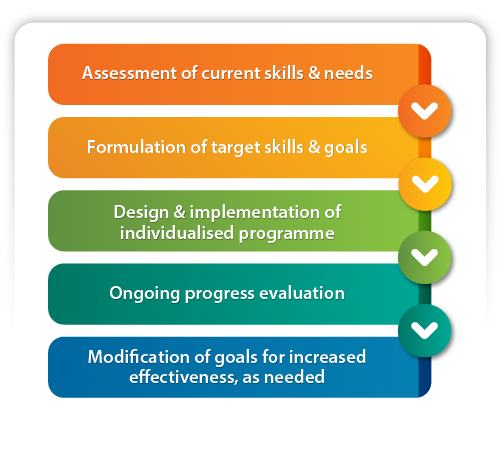 principles of learning and motivation to increase functional skills, reduce undesirable behaviours, teach more adaptive replacement skills and help generalise the learning in various forms.
It uses a data-driven approach, which continuously tracks and monitors the child’s progress towards defined goals for a more effective programme.
When implementing ABA intervention, behaviours that are essential and relevant to the child are targeted for teaching. For example, learning to cross the street independently may be critical for one child, while toilet training may be critical for another.
ABA also adopts a holistic and collaborative approach with other professionals, such as Speech Therapists, Occupational Therapists and Psychologists, to enable the child to reach their fullest potential.
It is highly recommended that children start their ABA therapy as young as 2 years old. The earlier the child receives intervention, the better the child can progress and see significant improvements.
Ultimately, ABA aims to establish and enhance socially important behaviours. Such behaviours can include communication, social, self-help, academic, play skills and daily living skills – essentially, any skills that can foster independence and enhance the quality of life for the child.